Ace of Swords Tarot Card Meaning
The Ace of Swords is the first clean cut of understanding — the moment a tangle becomes a sentence you can say out loud. It is not a prize for being clever. It is the relief of seeing what was already there, once the fog thins.
- Arcana: Minor
- Suit: swords
- Element: Air
- Traditional keywords: clarity · breakthrough · truth · mental force · new idea
- Mystic Draw themes (upright): breakthrough · mental clarity · honest speech · a clean idea
- Mystic Draw themes (reversed): fog · distorted truth · harsh words · forced certainty
Upright meaning
Upright, this Ace arrives like a window thrown open. A thought that has been circling finally lands; a conversation that has been postponed finds its first true word. The sword is a tool of distinction: this, not that; true enough to act on, false enough to set down. In Rider–Waite–Smith tradition the blade is crowned, which is a reminder that insight wants a purpose beyond winning. Clarity can free a room, or it can slice it. The card asks which you are reaching for.
Reversed meaning
Reversed, the same edge dulls or turns inward. You may be arguing from a story that sounds sharp and is not actually checked. Fog, mixed signals, or a half-true headline can feel like insight because they reduce anxiety for a moment. Sometimes the reversal is simply timing: the idea is real, but it is not ready to be announced. Sometimes it is the opposite — you already know, and you are using complexity as a delay. Either way, the invitation is to slow the cut until the facts can bear it.
Love and relationships
In love, the Ace of Swords often names the conversation that changes the air between two people. It can be a first honest naming of needs, a boundary spoken without theatre, or the end of a polite fiction that was exhausting both of you. It does not promise a reunion or a split. It asks whether your words are trying to understand, or trying to win. Kindness is not the enemy of precision; it is what keeps precision from becoming a performance.
Career and work
At work, this card can mark a brief, useful flash: a diagnosis of a stuck process, a sentence in a document that finally tells the truth, a meeting where someone says the quiet part without cruelty. It favors drafts, outlines, and decisions that can be written down. If the culture rewards being the smartest person in the room, the Ace of Swords still asks you to test the idea against reality, not against applause.
Money and practical life
As a money reflection, the Ace of Swords is less about a windfall than about seeing the numbers without a story wrapped around them. A budget, a contract clause, a debt you have been renaming as “fine” — the card invites a plain look. It is not a forecast of gain or loss. It is a question: what becomes possible when you stop arguing with the arithmetic?
Personal growth
For growth, this Ace is practice in thinking that does not abandon the body. Insight that leaves you breathless and unkind is incomplete. The work is to let a true thought land, then to stay human while you carry it. Journaling, a trusted conversation, or writing the sentence you keep rehearsing can be enough. You do not have to become a courtroom to become clearer.
Imagery and symbolism
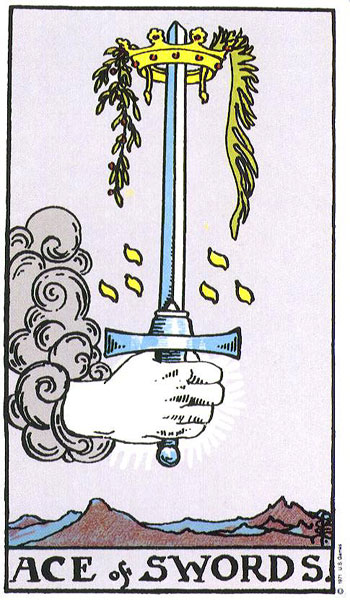
Pamela Colman Smith’s Ace of Swords shows a divine hand issuing from a cloud, gripping a single upright blade. A crown sits at the tip, wound with laurel and olive — victory and peace offered together, which is rarer than victory alone. Six yods, or small flame-like drops, fall from the crown. Below, the land is mountainous and spare. The scene is not a battlefield; it is a threshold. Air, not blood, is the element. The sword has not yet chosen a story. That choice belongs to the person who picks it up.
What this card may be asking you to notice
Notice whether your new clarity arrives with breath, or with a clenched jaw. Notice who would be hurt if you used this truth as a trophy. The Ace of Swords often asks you to write the insight down before you deliver it, so you can hear its tone.
Related cards
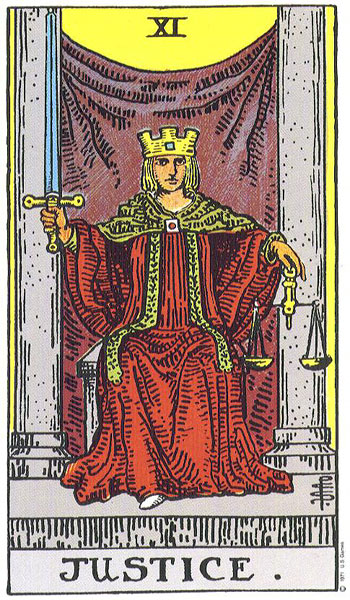 JusticeJustice weighs truth: contracts, ethics, cause and effect. Upright, clarity arrives—sometimes legally, sometim…
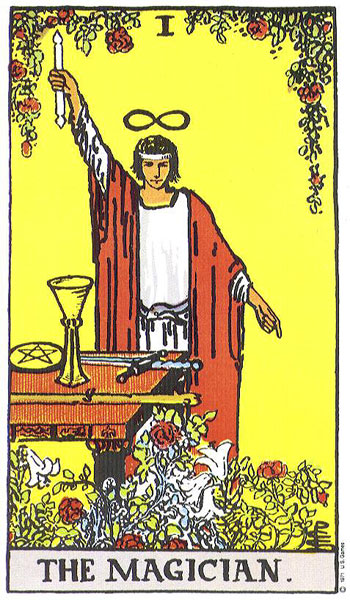 The MagicianThe Magician names concentration. The tools are already on the table—wand, cup, sword, coin—and a channel is p…
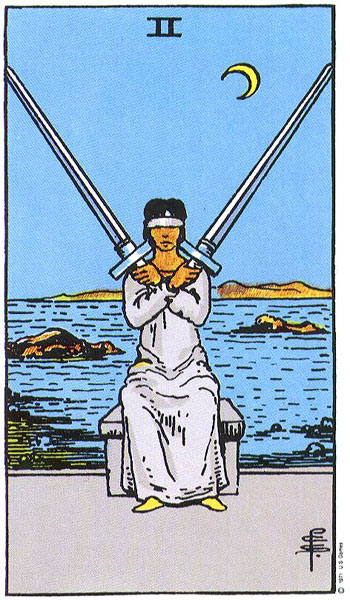 Two of SwordsThe Two of Swords is the moment you cross your arms around a decision and call it peace. Sometimes that pause …
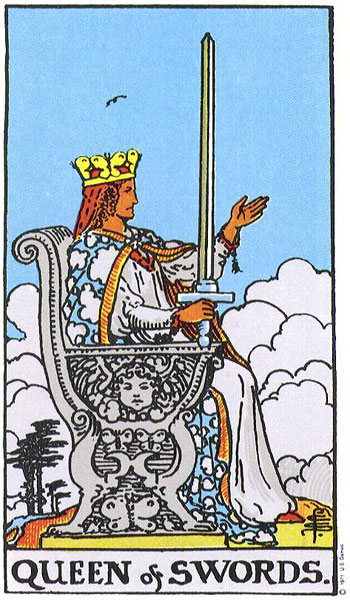 Queen of SwordsThe Queen of Swords is Air matured — perception that does not need to shout, a boundary that can be spoken in …
Questions people ask
What does the Ace of Swords tarot card mean?
It often reflects a breakthrough in understanding — a truth, idea, or decision that cuts through confusion. In Mystic Draw’s reading of the card, the gift is precision, not combat. How you speak the insight matters as much as having it.
How might the Ace of Swords speak to love?
It can point to a clarifying conversation, a named boundary, or the end of a half-truth that has been holding a partnership in fog. It does not decide the outcome of that honesty. It asks whether the words are meant to connect or to cut.
What could the reversed Ace of Swords be asking?
Reversed, the card may ask you to check your sources — including your own mind. Fog, rumor, or a too-sharp sentence can impersonate insight. Sometimes the reversal simply says: wait until the thought can be said without harm you did not intend.
Is the Ace of Swords always a “yes”?
Mystic Draw does not treat tarot as a yes-or-no machine. This Ace can support a clear decision, but it does not guarantee a particular result. It is better read as an invitation to name what is true enough to act on, then to act with care.
This page is a reference. Mystic Draw draws cards at random in a reading — it cannot promise this card will appear. How a three-card reading works · How to read tarot cards.