Justice Tarot Card Meaning
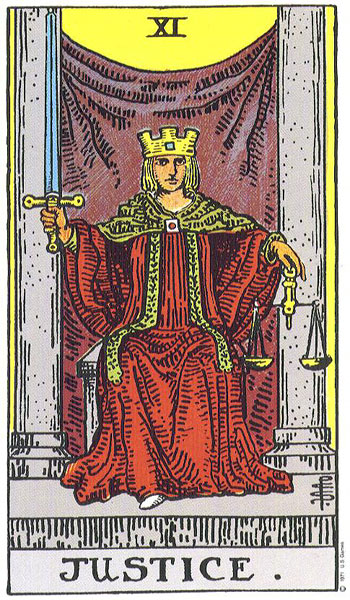
Justice weighs truth: contracts, ethics, cause and effect. Upright, clarity arrives—sometimes legally, sometimes morally, sometimes as the simple relief of a fact finally named. What you measure returns; integrity is the scale’s calibration, and a reading is not a substitute for counsel or a verdict from the universe.
- Arcana: Major
- Element: Air
- Traditional keywords: truth · fairness · accountability · balance · consequence
- Mystic Draw themes (upright): cause and effect · ethical clarity · fair process · honest measure · accountability
- Mystic Draw themes (reversed): rigged scale · avoided accountability · bias · self-prosecution · unfair outcome
Upright meaning
Upright, Justice is the moment a story has to meet a fact. You may need to put something in writing, apologize at the actual size of the harm, or stop arguing with an outcome that followed from a choice. The sword is double-edged because intellect can heal or cut; the work is to use it for seeing, not for winning.
This card is Libra in the usual correspondences, but it is not “keep everyone happy.” Fairness can disappoint people who preferred a fog. When Justice appears well, you are being asked to become someone whose inner scale and outer agreements tell the same time.
Reversed meaning
Reversed, the scale is rigged—by a system, by a person with more power, or by the way you judge yourself. You may dodge accountability, or you may prosecute yourself for a crime that was mostly being human. Bias loves this position: the evidence that would complicate your case never makes it onto the pan.
An unfair outcome in the world is not always a spiritual lesson you “attracted.” Sometimes it is injustice, and the card is asking you to name it and seek appropriate help. Sometimes it is your own avoidance wearing a blindfold you put on yourself. Tell those stories apart.
Love and relationships
In love, Justice wants honest agreements and apologies that match harm. “We never said we were exclusive” is a legalism if everyone knew otherwise. “I’m sorry you feel that way” is a scale with a thumb on it.
Partnerships that last usually have a jurisprudence: how we decide, how we repair, what we will not pretend. If you are waiting for a cosmic ruling that your person is guilty or innocent, you may be avoiding the slower work of looking at what actually happened. The card is a poor tool for revenge and a good tool for clarity.
Career and work
Work here is process: audits, contracts, credit where it is due, the paper trail that protects everyone including you. Compliance can be tedious and still be a form of care. So can refusing to participate in a slightly crooked shortcut.
If you are the person who always “keeps the peace” by absorbing unfairness, Justice may be asking you to stop being the unofficial shock absorber. If you are the person who weaponizes policy, the sword has forgotten it has two edges.
Money and practical life
Money and Justice meet at fair exchange, debts named honestly, and the difference between what you are owed and what you wish you were owed. Taxes, splits, restitution, a contract you should actually read: unglamorous, clarifying.
This is not legal or financial advice, and it is not a promise that a court or a cosmos will side with you. It is a prompt to put numbers and terms in the light. If a deal only works because someone is in the dark, you already know which way the scale is leaning.
Personal growth
Inner work is a shadow inventory without cruelty. Truth as liberation, not as a sport. You can be exacting toward your own patterns without becoming a hanging judge.
Growth is also accepting that some consequences cannot be negotiated with charm. The pillars beside Justice rhyme with the High Priestess and the Hierophant: this is law held between inner knowing and outer form. Let both have a say. Let neither become a theater of punishment.
Imagery and symbolism
Smith seats Justice between two pillars, crowned, in a red robe, a golden scale in the left hand and a two-edged sword held upright in the right. A small square ornaments the crown: earthly law under a higher measure. Unlike later pop images, she is not blindfolded in this deck; Waite wanted sight, not a pantomime of impartiality.
History of the image: Waite placed Justice at XI, after Strength, reversing the Marseille order so that this trump would sit as a hinge of the second half of the journey—the weighing that follows fortitude. When you read the card, notice that the sword points up. The intellect is meant to refer beyond itself. A scale with nothing on it is only jewelry.
What this card may be asking you to notice
Notice which facts have not been allowed onto the scale, including facts that would make you less of a hero or less of a victim. Where is an apology still the wrong size? Where are you asking tarot to do a job that belongs to a conversation, a contract, or—if harm is serious—an appropriate professional?
Related cards
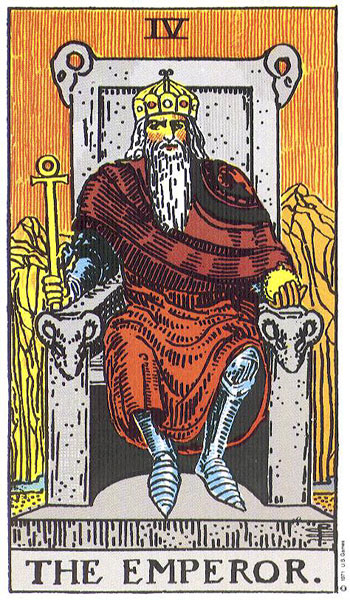 The EmperorThe Emperor structures chaos into something navigable: law, schedule, leadership, protection. Upright, authori…
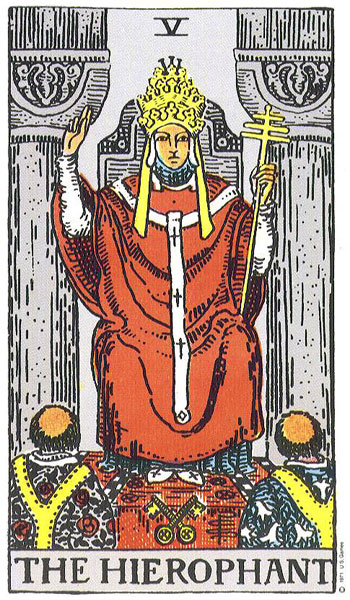 The HierophantThe Hierophant bridges the temple and the street: tradition, teaching, initiation, shared language. Upright, y…
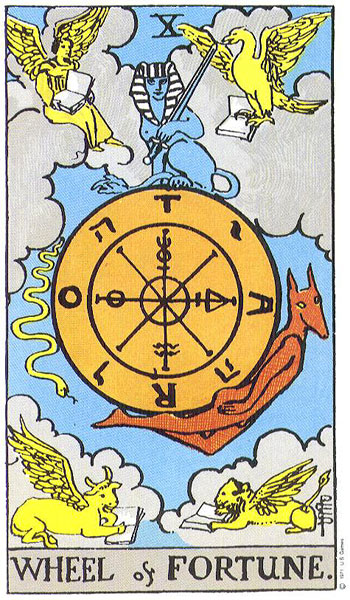 Wheel of FortuneThe Wheel reminds you that seasons turn: luck, timing, the feeling that a chapter is changing its weather. Upr…
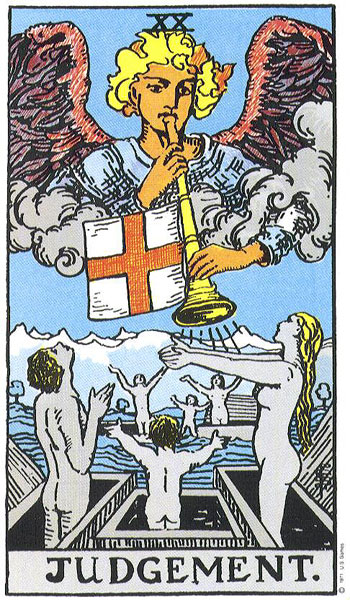 JudgementJudgement is the call upward: reckoning, rebirth, answering a vocation. Something in you—or in a larger story …
Questions people ask
What does the Justice tarot card mean?
It names cause and effect, ethical clarity, and the need for a fair measure. Legal and contractual themes can appear because the image is a court of sorts, but a card is not a lawyer and not a prophecy of a verdict. Read it as a request for honesty about what followed from what—and whose thumb is on the scale.
What can Justice mean in love?
Agreements, repair, and the difference between a feeling and a fact. It can ask for a conversation that names harm at its real size, or for a relationship to stop living on unstated terms. It does not assign a soulmate a score of innocent or guilty. It asks whether the bond could survive the truth.
How might Justice reversed be understood?
As bias, avoided accountability, an unfair system, or a inner judge that never acquits. Reversed is not automatically “you will lose.” It is “the measuring is off.” Restore a real process—sometimes with help outside the cards—before you treat the situation as a moral fable with you as the only character.
Does Justice mean I will win a legal case?
No card can promise that, and treating tarot as counsel would be a misuse of both the image and the situation. If a legal, medical, or financial matter is live, the adult move is appropriate professional help. In a reading, Justice is still useful as a mirror: what is the true weight of what happened, and what would fair repair look like?
This page is a reference. Mystic Draw draws cards at random in a reading — it cannot promise this card will appear. How a three-card reading works · How to read tarot cards.