Death Tarot Card Meaning
Death is transition, not only loss: an ending that clears space. Grief may be present, but so is relief when something false finally stops. Transformation is rarely cosmetic—it changes the shape of your days—and the card is not a forecast of physical harm. It is a picture of a skin that cannot stay.
- Arcana: Major
- Element: Water
- Traditional keywords: transformation · endings · transition · release · renewal
- Mystic Draw themes (upright): ending that clears · necessary shedding · transition · grief and relief · changed days
- Mystic Draw themes (reversed): clinging · decay without release · refused grief · haunting · safety as stagnation
Upright meaning
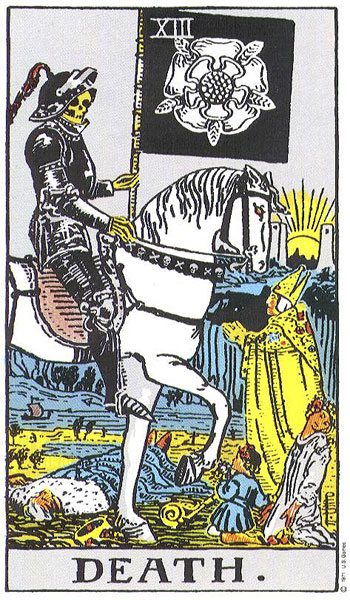
Upright, Death names a completion that will not be bargained back into the old form. A job, a story about who you are, a relationship’s current shape, a belief that once kept you safe: something has reached the river. The skeleton in Smith’s image does not chase. It arrives, and the living respond according to their readiness.
This card is Scorpio water: deep, seasonal, concerned with what must compost. When it is well placed, you may already know what is over and have been waiting for permission to admit it. The permission is not the universe’s. It is the part of you that can stand at the gate without pretending the sun on the far side is a trick.
Reversed meaning
Reversed, decay without release—clinging, haunting, or refusing to grieve. Stagnation dresses as safety. You may keep a project, a bond, or an identity on life support because the ending would make you someone you do not yet know how to be.
The reversal can also be a transformation you are undergoing so internally that the outer life has not caught up, or a fear of the card’s name that keeps you from reading the rest of the picture. Let the image be a gate. Ask what you are dragging through it that already died.
Love and relationships
In love, Death can be a breakup, or it can be the death of a form of commitment that was pretending to be the whole story: a dynamic, a fantasy, a way of being needed. Radical honesty about what has already ended is kinder than a slow untrue afterlife.
If you are paired, the card may ask you to let a chapter close so another can be lived—without using “transformation” as a euphemism for neglect. If you are unpartnered, it may be the end of a type you keep dating. The white rose on the flag is a stripped, honest affection, not a threat.
Career and work
Work here is sunset products, role changes, industries that have moved, KPIs that no longer measure what matters. Letting a professional identity complete is Death work. So is admitting that a dream job became a costume.
You do not need to torch a career to honor the card. You do need to stop performing a role whose heart has left. The bishop, child, and maiden in the image respond differently to the same rider; in an office, that is the meeting where everyone already knows and no one will say.
Money and practical life
Money and Death meet at closed accounts, ended arrangements, inheritances in the broad sense (what is passed, what is finished), and the cost of keeping something dead on the books. Clearing space can be financial as well as emotional.
This is not a prediction of ruin or of a windfall from loss. It is a prompt to stop funding a former life. If grief is driving spending—or if fear of poverty is keeping you in a dead exchange—the horse has already arrived. The question is whether you will look at it.
Personal growth
Initiation language fits: the old skin must split. Mourning is part of the curriculum if you actually loved what ended. So is the unglamorous work of new habits, because transformation that never reaches the calendar is only a mood.
Growth is allowing relief to sit beside grief without making either one the whole truth. The sun between the towers in Smith’s picture is not a consolation prize. It is the next day, which will have a different shape whether you consent or not. Consent is how you keep your dignity at the gate.
Imagery and symbolism
A skeletal knight in black armor rides a pale horse, a black banner bearing a white five-petaled mystic rose. A king lies unseated; a bishop stands in appeal; a maiden kneels; a child watches with less fear than the adults. In the distance, a river, a boat, and a sun between two towers—the same towers the Moon will later flank, here with dawn in the gap.
History of the image: thirteenth trump has long been a skeleton in tarot, but Smith’s version is a procession, not a random scythe in a field. Waite was explicit that the card is change and transformation in the operational sense. When you read it, look at the different human responses in the foreground. The meaning is often which figure you are today, not a rumor about literal death.
What this card may be asking you to notice
Notice what you are still feeding that no longer eats, and what ending you have been calling a pause. If the sun is already between the towers, what would it cost you to admit the night portion of this chapter is over? Whose permission are you waiting for to take off the old skin?
Related cards
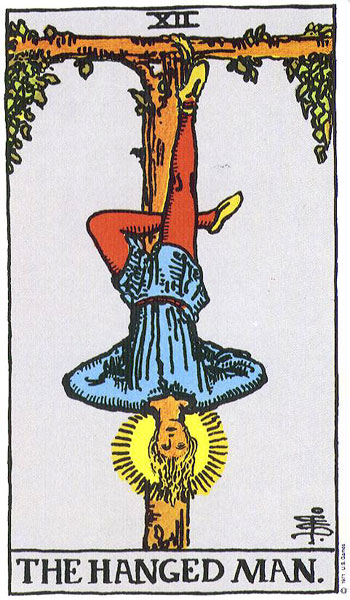 The Hanged ManThe Hanged Man suspends ordinary motion so a new angle appears. Surrender is active: you stop forcing until me…
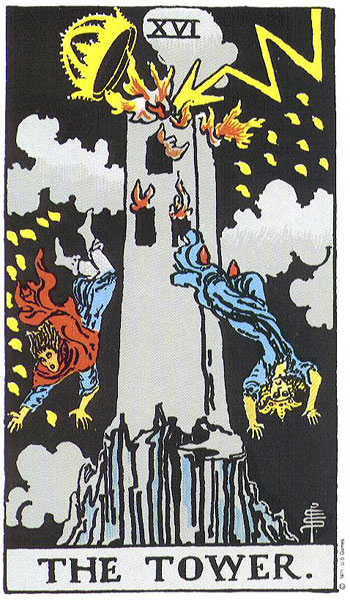 The TowerThe Tower is sudden clarity via collapse: structures built on lies, denial, or bad data cannot hold lightning.…
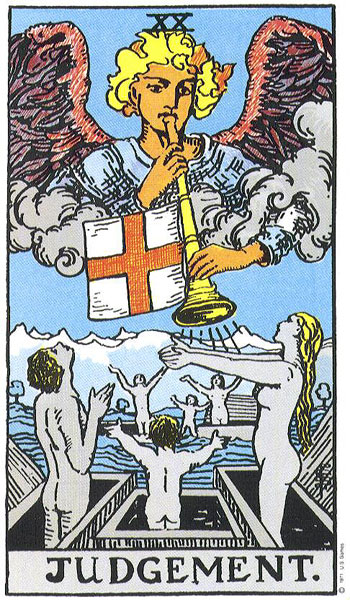 JudgementJudgement is the call upward: reckoning, rebirth, answering a vocation. Something in you—or in a larger story …
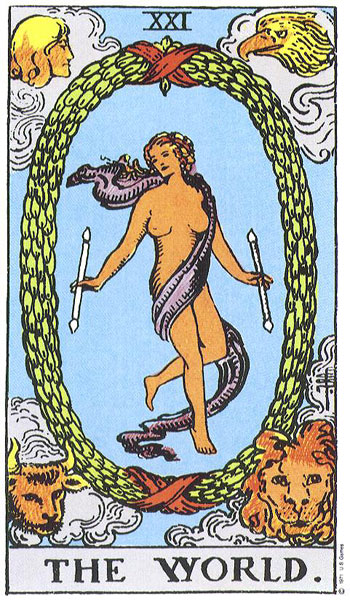 The WorldThe World closes a major cycle with integration: travel, graduation, wholeness that includes shadow. You know …
Questions people ask
What does the Death tarot card mean?
It names an ending that clears space: a transition in form, identity, or chapter. Grief and relief can travel together. In a reflective practice it is not a prediction of physical death or disaster. Look at what has already completed, and at what you would have to become if you stopped performing the old life.
What can Death mean in a love reading?
The close of a relationship, or of a way of relating that cannot continue. It can also be a necessary shedding inside a bond that will continue in another shape. It does not decree that love is over, and it does not romanticize leaving. It asks for honesty about what has already died so it is not dragged along as a haunt.
How should I read Death reversed?
As clinging, refused grief, stagnation dressed as safety, or a change stuck in the inner world with no outer rite. Reversed is not “you escaped the ending.” Often the ending is simply overdue. Ask what you are keeping on life support, and what support you might need to let it complete.
Should I be afraid if Death appears in a spread?
The name is supposed to startle; the Rider–Waite–Smith picture is a gate with a sun in it. Fear is information—often fear of being changed. Let that fear sit beside the actual question you asked. If you are in a crisis that needs practical help, cards are a companion, not a replacement for that help.
This page is a reference. Mystic Draw draws cards at random in a reading — it cannot promise this card will appear. How a three-card reading works · How to read tarot cards.