
Judgement Tarot Card Meaning
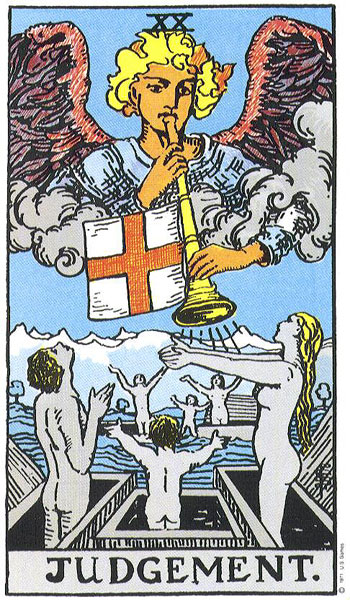
Judgement is the call upward: reckoning, rebirth, answering a vocation. Something in you—or in a larger story you belong to—asks for a final honest accounting, then a fresh octave. Forgiveness and purpose intertwine here, which is different from being found guilty by a card or by a crowd.
- Arcana: Major
- Element: Fire
- Traditional keywords: awakening · reckoning · calling · absolution · rebirth
- Mystic Draw themes (upright): summons · honest accounting · rebirth · vocation · forgiveness with purpose
- Mystic Draw themes (reversed): harsh inner critic · ignored calling · gossip as morality · delayed rising · fear of the next octave
Upright meaning
Upright, Judgement is an audible summons. You may already hear it: a work that wants you, a repair that is overdue, a self you can no longer pretend not to be. Pluto-and-fire talk in some correspondence systems; in the picture it is simpler. A horn sounds. People stand up in their boxes.
When the card is well placed, the accounting is in service of rising, not of rumination. You look at what you have done and been, and then you get out of the coffin of the old name. Collective notes can appear—family patterns, a generation’s work—but the child, woman, and man in Smith’s image still rise as particular bodies.
Reversed meaning
Reversed, harsh self-judgment, an ignored calling, or gossip dressed as morality. Fear of change delays the resurrection. You may be holding a tribunal in your head that no living person asked for, or waiting for a perfect purity before you will answer a perfectly ordinary call.
The reversal can also be refusing to evaluate at all, calling that refusal kindness. Some things do need a last honest look. The flag in the angel’s hand is a cross of equal arms: vertical and horizontal obligations, spirit and neighbor. Skip either one and the horn just sounds like noise.
Love and relationships
In love, Judgement can be a second chapter, a decision to marry or to unmarry a story, the naming of what you truly want after a long sleep. Reunion themes appear in the image—figures rising together—without requiring a destined ex to return.
If you are using “we’re meant to” to skip the accounting of how you have treated each other, the horn is not a wedding march. If you are using past harm as a forever sentence with no possibility of a new octave, you may be the one keeping the coffin lid on. Forgiveness, when it is real, is a rising, not a forgetting.
Career and work
Work here is a pivot aligned with legacy, not only salary: the job that feels like answering, the project that is yours to do, the moment a hobby admits it is a vocation. Reviews, reckonings, and “what am I doing with this life?” weeks sit here.
A calling is not always dramatic. Sometimes it is the next honest role after you stop performing the old one. If you ignore it, the reversal’s inner critic will happily take the job of the angel, which is a poor substitution. Critics shrink. Horns enlarge.
Money and practical life
Money and Judgement meet at a review: what your spending and earning say about what you serve, debts of the moral kind as well as the numeric, the cost of a life that does not match the summons.
This is not a prediction of a payout for being good. It is a prompt to let your material life be part of the accounting, then part of the rising. If you cannot forgive yourself for a past financial chapter, you may be living in that chapter’s coffin. A new octave still has bills. It does not have to have the same shame.
Personal growth
Life review without cruelty; answer the quiet summons. Judgement is a poor home for people who want to be declared innocent so they never have to change, and a poor home for people who want to be declared guilty so they never have to begin.
Growth is letting purpose and mercy occupy the same resurrection. You can admit harm and still stand up. You can hear a vocation and still be a person with a body and a calendar. The mountains in the background are a world that continues after the horn. You get to join it, awake.
Imagery and symbolism
An angel, winged and haloed, blows a bannered trumpet from a cloud; the banner bears an equal-armed cross. Below, gray figures rise from rectangular coffins that float on or stand in a sea, arms lifted: a man, a woman, a child, a suggestion of more beyond. Snow-mountains close the horizon. The mood is sound as much as sight—Waite’s last trump as an awakening you can hear.
History of the image: Christian resurrection iconography was already in the tarot Judgement. Smith kept the graves and the angel and made the water a medium of rising, not only of baptism. When you read the card, listen for which call is actually sounding in your life. Not every loud opinion is a horn. The true one usually asks you to stand up, not to stone someone.
What this card may be asking you to notice
Notice which tribunal you are holding that has no angel in it—only a critic—and which summons you keep calling a mood so you will not have to stand up. What would a merciful accounting include? Who else is rising in the same water, and what do you owe them besides a story about yourself?
Related cards
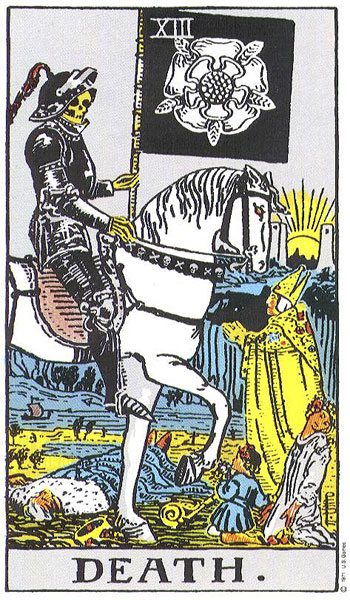 DeathDeath is transition, not only loss: an ending that clears space. Grief may be present, but so is relief when s…
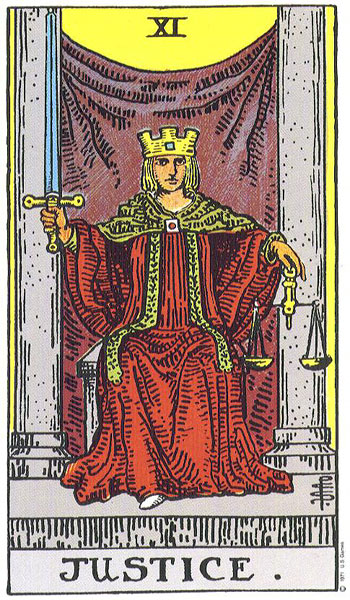 JusticeJustice weighs truth: contracts, ethics, cause and effect. Upright, clarity arrives—sometimes legally, sometim…
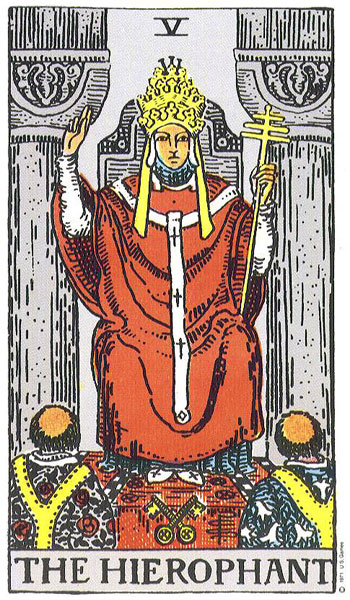 The HierophantThe Hierophant bridges the temple and the street: tradition, teaching, initiation, shared language. Upright, y…
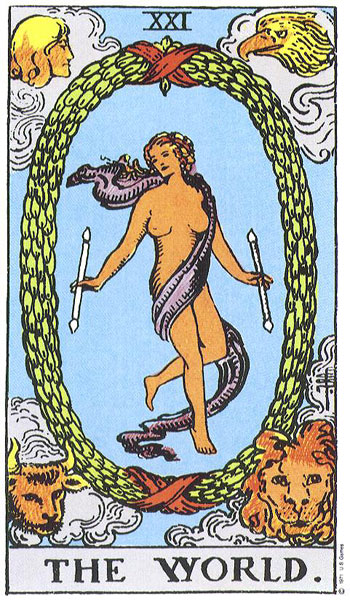 The WorldThe World closes a major cycle with integration: travel, graduation, wholeness that includes shadow. You know …
Questions people ask
What does the Judgement tarot card mean?
It names a summons: reckoning, rebirth, the sense of being called into a next octave of life. Forgiveness and purpose often travel together. It is not a cosmic guilty verdict, and it is not a guarantee of a public triumph. Ask what honest accounting would actually free you to stand up.
What can Judgement mean in love?
A second chapter, a defining yes or no after a long sleep, reunion themes, or the need to name what you truly want. It does not promise that an ex will return, and it does not bless a bond that skips accountability. Rising together, in the image, still requires each figure to get out of their own box.
How might Judgement reversed be read?
As a harsh inner critic, an ignored vocation, gossip posing as ethics, or a delayed rising. Reversed can mean the horn already sounded and you are still arguing with the bed. It can also mean you need a kinder judge before you will move. Restore mercy and accuracy; then answer.
Is Judgement about being judged by others?
Other people’s opinions can be the noise that wakes you, or the noise that drowns the real call. The Rider–Waite–Smith angel is not a crowd. If you are living for a tribunal of colleagues, family, or strangers, you may be in the reversal’s gossip-as-morality weather. Listen for the summons that would still be there if the crowd went home.
This page is a reference. Mystic Draw draws cards at random in a reading — it cannot promise this card will appear. How a three-card reading works · How to read tarot cards.