The Chariot Tarot Card Meaning
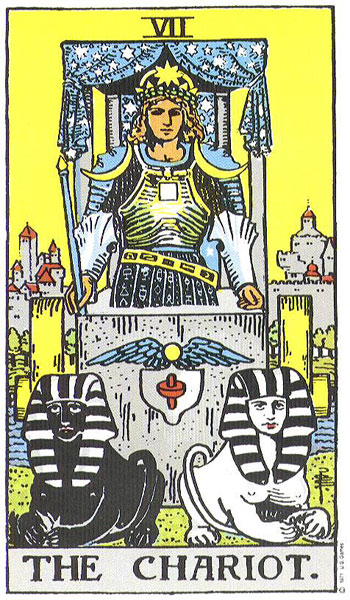
The Chariot wins through focus: opposing forces steered by will, not crushed. Momentum comes when you pick a lane and commit. Victory is often private—self-mastery more than a trophy—and the city behind the wheels is a reminder that you cannot steer forward while staring only backward.
- Arcana: Major
- Element: Water
- Traditional keywords: determination · victory · direction · will · momentum
- Mystic Draw themes (upright): chosen lane · steered will · momentum · self-mastery · victory without crush
- Mystic Draw themes (reversed): fragmented direction · road rage at the self · every battle at once · passive aggression · momentum without aim
Upright meaning
Upright, the Chariot is the moment you stop arguing with the fact of a direction. Two pulls—caution and appetite, home and road, two agendas in a team—are still there. The work is to hold the reins so they make a path instead of a wreck.
This is Cancer in the Golden Dawn scheme: a surprising water card about armor. Feeling is not banished; it is harnessed. When the card is well aspected, you may need a campaign, a deadline, a training plan, a journey with a name. Will without a star to travel under is just restlessness in a breastplate.
Reversed meaning
Reversed, direction fragments. You pick a fight with yourself, or with everyone, because the sphinxes have slipped the bit. Passive aggression, scattered effort, and the exhaustion of treating every errand as a war all live here.
Sometimes the reversal is stalled motion: a vehicle you will not mount because winning would change your life, or because you do not trust your own hands. Aggression without aim burns fuel. So does sitting in the chariot complaining that the road has not arranged itself.
Love and relationships
In love, the Chariot prefers a clear pursuit or a clear pause. Mixed signals exhaust everyone, including the person sending them. If you want someone, say so in a way that leaves them room to steer too. If you need to go, go without turning the departure into a series of small collisions.
Couples can draw this card when they are traveling, moving, or trying to get two family systems to pull as one. The sphinxes are a useful image for two stubborn truths that will not become the same color. Steering is intimacy. Crushing one sphinx is not.
Career and work
Work loves this card: launches, competitions, certifications, the last mile of a build. Channel rivalry into craft. A campaign with a finish line is healthier than a personality that must always be winning.
If you are the only engine in a team, notice whether you have a chariot or a burden. Leadership here is getting opposing stakeholders to move. It is not proving you can drag the whole vehicle with your teeth.
Money and practical life
Money and the Chariot meet at directed effort: paying down a named debt, funding a move, turning a skill into a vehicle that can actually travel. Momentum is useful. Reckless speed toward a lifestyle picture is the sphinxes without a driver.
The card does not promise a windfall because you “stayed hungry.” It asks whether your financial motions share a lane. If half your money is building a future and half is fighting a feeling, the wheels are already pulling apart.
Personal growth
The inner charioteer is the part of you that can feel two feelings and still choose a road. Align emotion and mind toward one star for a season. That is not the same as suppressing water; the card’s element is water under armor.
Growth is leaving the city of old identities without pretending you have no past. The canopy of stars in Smith’s image is a map, not a ceiling. You are allowed to navigate. You are not required to conquer every landscape you pass.
Imagery and symbolism
Smith’s charioteer stands in a stone vehicle beneath a blue canopy strewn with stars, a celestial order over a martial body. Two sphinxes, one black and one white, crouch where Marseille decks often used horses: opposites that will not be made identical, only driven. On the breastplate a square; below it a emblem Waite related to the mysteries of union—will seated over instinct.
The city is behind him. History of the image: Waite insisted the victory is first a victory in the mind, not merely a parade. The figure does not hold reins in the usual way; the sphinxes are governed by presence as much as by leather. When you read the card, ask what you are trying to force with noise, and what would move if you actually picked a heading.
What this card may be asking you to notice
Notice which opposite you are trying to kill instead of steer, and which “victory” would only prove you can exhaust yourself. If the city is behind you, what are you still craning backward to manage? If you have no star on the canopy, why are the wheels turning?
Related cards
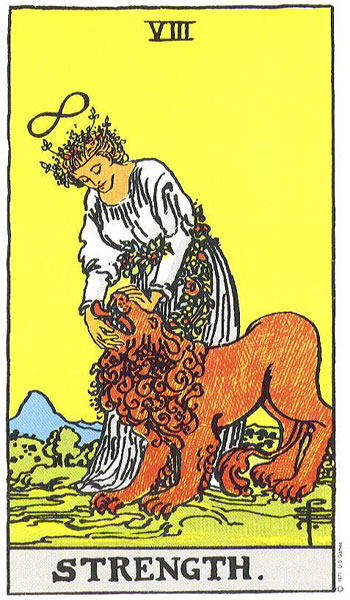 StrengthStrength is courage with a soft hand: influence without domination, patience that outlasts panic. The lion is …
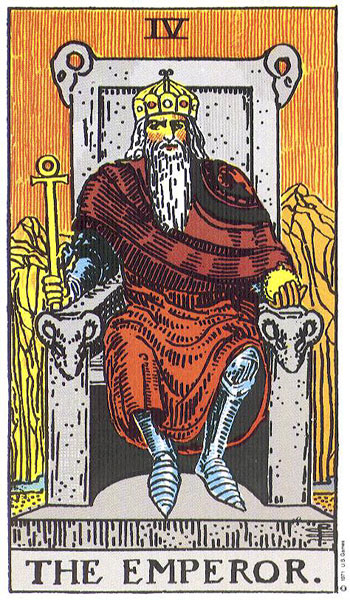 The EmperorThe Emperor structures chaos into something navigable: law, schedule, leadership, protection. Upright, authori…
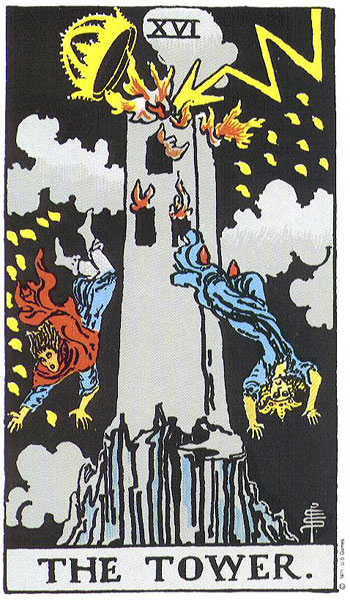 The TowerThe Tower is sudden clarity via collapse: structures built on lies, denial, or bad data cannot hold lightning.…
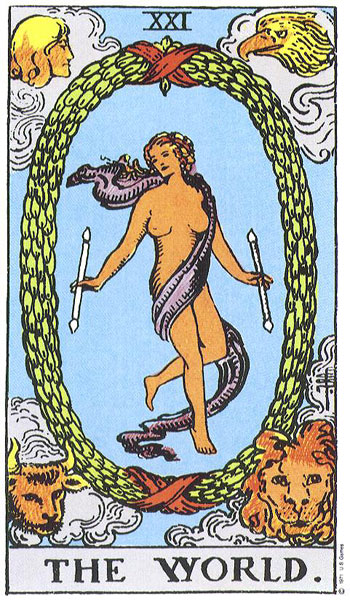 The WorldThe World closes a major cycle with integration: travel, graduation, wholeness that includes shadow. You know …
Questions people ask
What does the Chariot tarot card mean?
It names focused will: opposing forces brought into a direction rather than crushed or denied. Progress, travel, and competitive effort can all appear, but the heart of the image is self-command. It is not a trophy already delivered. It is a question about whether you have chosen a lane.
What can the Chariot mean in love?
Clear pursuit, a shared move, or the work of getting two strong natures to travel together. Mixed signals and power struggles are the shadow. The card does not tell you to chase someone who has said no, and it does not tell you to steamroll a partner. Steering requires two living creatures, not one crushed will.
How might the Chariot reversed show up?
As scattered effort, stalled motion, inner road rage, or picking every battle. You may be over-forcing, or you may be refusing to take the reins. Reversed is a prompt to restore aim—or to admit that the vehicle you are in is not actually yours to drive.
Why are there sphinxes instead of horses?
Smith and Waite replaced the usual horses with black and white sphinxes to stress polarity held in tension—an echo of the High Priestess’s pillars, now put in motion. The history of the image is a clue for reading: you are not looking for a life with no opposites. You are looking for a driver.
This page is a reference. Mystic Draw draws cards at random in a reading — it cannot promise this card will appear. How a three-card reading works · How to read tarot cards.