The Emperor Tarot Card Meaning
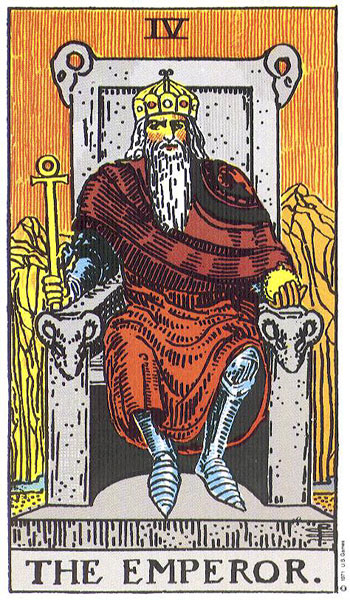
The Emperor structures chaos into something navigable: law, schedule, leadership, protection. Upright, authority serves stability—clear rules, fair hierarchy, a spine for the soft parts. It is father-energy in the archetypal sense: provision and order, not a claim that any particular man or boss is destiny.
- Arcana: Major
- Element: Fire
- Traditional keywords: structure · authority · stability · leadership · order
- Mystic Draw themes (upright): structure · protective order · leadership · clear rules · spine
- Mystic Draw themes (reversed): rigidity · control · abdication · tyranny · fear under the armor
Upright meaning
Upright, the Emperor is the relief of a map. Someone—perhaps you—has decided that not everything must be renegotiated every morning. Boundaries, timelines, and roles can be kindness when they keep the vulnerable parts of a project or a family from living in constant weather.
This card is not in love with control for its own sake. It is in love with a realm that can be walked. When it appears well, you may need to become the person who says the quiet rule out loud: this is how we decide, this is when we meet, this is what “done” means. Softness survives longer with a spine.
Reversed meaning
Reversed, order becomes rigidity, domination, or a vacuum. Tyranny and abdication are cousins here; both are ways of not sharing power cleanly. Fear often sits under both extremes—fear of chaos, fear of being ordinary, fear of being the one who has to hold the line.
You may also be living under an inner emperor who never clocks out: a voice that treats rest as desertion. The reversal asks whether structure is still serving life, or whether life has been conscripted to serve the structure.
Love and relationships
In love, the Emperor favors grown-up conversations about the future: commitment, logistics, whose name is on the lease, how conflict will be handled. Clarity can be erotic in its own way. So can reliability.
The shadow is a partner—or a self—who confuses love with governance. If affection has to pass through a checkpoint, or if one person makes all the weather, the ram on the throne has stopped being protective. Ask whether the order you want would make both people safer, or only one person more certain.
Career and work
Work is native ground: org charts, contracts, milestones, the person who will actually own a decision. The Emperor wants expectations explicit. Ambiguity that was once “creative” may now be expensive.
If you are avoiding leadership because you do not want to become “the bad guy,” the card may still hand you the chair. Fair hierarchy is not the same as unkindness. The reversal warns against ruling by mood, or against leaving a team without a spine and calling it freedom.
Money and practical life
Money with the Emperor is budgets, records, and rules you can explain. A household or a business that cannot say where the resources go is a realm without a throne—picturesque until winter.
This is not a prediction of wealth through dominance. It is a prompt to put a frame around inflow and outflow so that care (the Empress) has something to stand on. If control of money is being used to control people, you are in the reversal whether the card came upright or not.
Personal growth
Inner work is discipline that frees you from constant renegotiation with yourself. A practice, a bedtime, a promise kept on unglamorous days: these are imperial in the best sense.
Growth is also noticing which inner laws you inherited and never ratified. Some structures are armor you still need. Some are armor from a war that ended. The barren mountains behind the throne are a clue: a defended life can forget how to grow things. Pair this card with the Empress when you need both.
Imagery and symbolism
Smith’s Emperor sits in profile on a stone cube throne studded with ram heads, the Aries correspondence Waite assigned to the card. Armor shows under the red robe: strength held in reserve, not displayed as a tantrum. He holds an ankh scepter and a globe—life and domain—against a backdrop of dry peaks. The realm is defended more than it is gardened.
Compared with the Marseille emperor, the RWS figure is more explicitly martial and less casually seated among courtiers. History of the image helps the reading: this is sovereignty as architecture. The throne does not apologize for being stone. Whether stone is a foundation or a tomb depends on what you are doing with the people who live in the empire, including yourself.
What this card may be asking you to notice
Notice which rules still keep you and others safe, and which rules exist so you will not have to feel uncertainty. Where are you wearing armor to a conversation that needed a table? Where have you left a vacuum and called it being easygoing?
Related cards
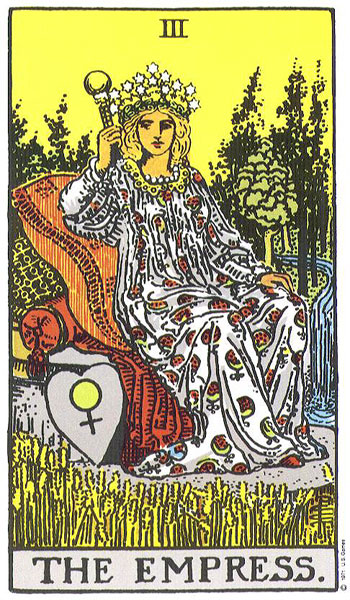 The EmpressThe Empress is generative life: beauty that feeds, bodies that rest, projects that grow because they are tende…
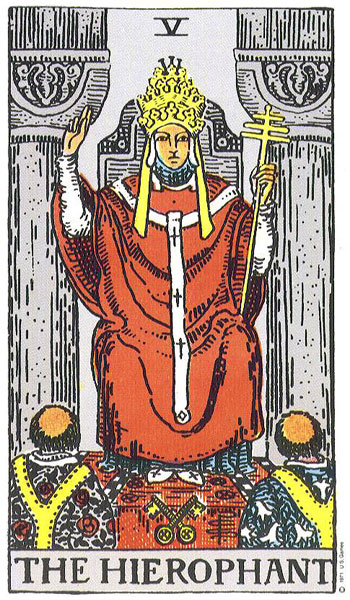 The HierophantThe Hierophant bridges the temple and the street: tradition, teaching, initiation, shared language. Upright, y…
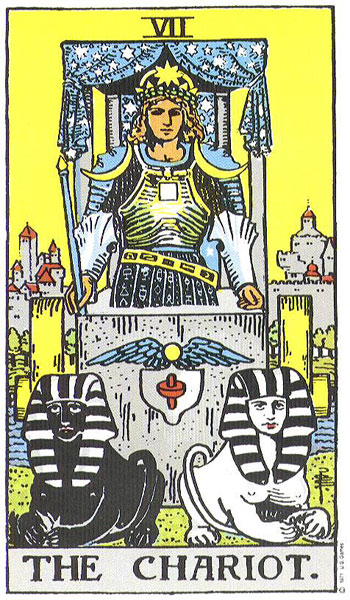 The ChariotThe Chariot wins through focus: opposing forces steered by will, not crushed. Momentum comes when you pick a l…
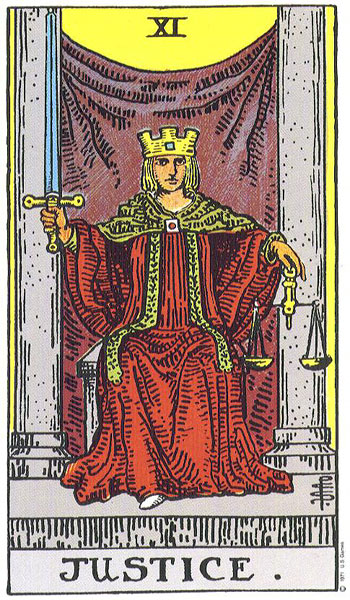 JusticeJustice weighs truth: contracts, ethics, cause and effect. Upright, clarity arrives—sometimes legally, sometim…
Questions people ask
What does the Emperor tarot card mean?
It names structure that can protect: leadership, law, schedule, a spine for what is otherwise chaos. In a reflective reading it is not “a powerful man will enter” and not automatic approval of whoever currently holds rank. It asks whether authority is serving stability, and whether you are willing to hold a line that makes life more navigable.
What can the Emperor suggest about love?
Commitment, logistics, and conversations about the future often come forward. Some people feel loved when the bond has a clear shape. Others feel trapped by the same shape. The card does not decide for you. It asks whether order in the relationship is mutual architecture or one person’s need to govern the weather.
How do I read the Emperor reversed?
Look for rigidity, control, tyranny, or the opposite abdication—no one steering. Fear commonly sits under both. Reversed can also be an inner critic in imperial costume. The question is not “is structure bad?” It is “is this structure still in service of a living realm, or has the realm been sacrificed to the throne?”
Is the Emperor only a father or boss figure?
Those people can carry the archetype, but the card is a function more than a casting call. You can be the Emperor of your calendar, your craft, or your recovery. You can also be living in someone else’s empire. Read the rest of the spread for whether the throne is yours, borrowed, or being used against you.
This page is a reference. Mystic Draw draws cards at random in a reading — it cannot promise this card will appear. How a three-card reading works · How to read tarot cards.